No win, no fee — you only pay if you win.
By Anne Gurski
Can’t afford a lawyer? What does “no win, no fee” really mean?
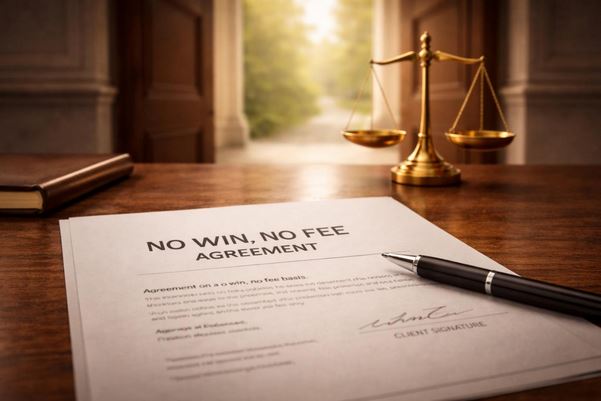
“No win, no fee” means that a lawyer is paid only if the case is successful. If the lawyer does not win the case, the client does not have to pay the lawyer’s fees. This arrangement is a legal agreement and must be set out in writing. The agreement explains what the client will pay if the case is won and what happens if the case is not successful.
How does “no win, no fee” work?
Under a “no win, no fee” agreement, the lawyer and the client agree in advance how the lawyer will be paid if the case is successful. This type of arrangement means the lawyer takes a risk together with the client. Lawyers accept this risk when they believe the case has a good chance of success. If the case is successful, the lawyer is usually paid from the compensation received, according to the agreement. However, no win, no fee does not always mean free, as the client may still need to cover certain costs, such as court fees.
What kinds of cases is ‘no win no fee’ usually used for?
“No win, no fee” is typically used for claims with a financial outcome, not for general legal advice. In most legal systems, no win, no fee is mainly used for personal injury and compensation claims, including accidents, medical negligence, and workplace injuries.
Where to find “no win, no fee” lawyers?
If someone wants a no win, no fee lawyer, they usually need to search online, contact lawyers directly, or check official professional websites, such as a law society or bar association (for example: https://solicitors.lawsociety.org.uk/).
Why understanding “no win, no fee” matters?
Understanding “no win, no fee” matters because it can support access to justice by removing the need to pay legal costs upfront. This arrangement can open the door to the justice system for people who would otherwise be excluded.